Lichen Sclerosus Maintenance: What to Do Between Flares
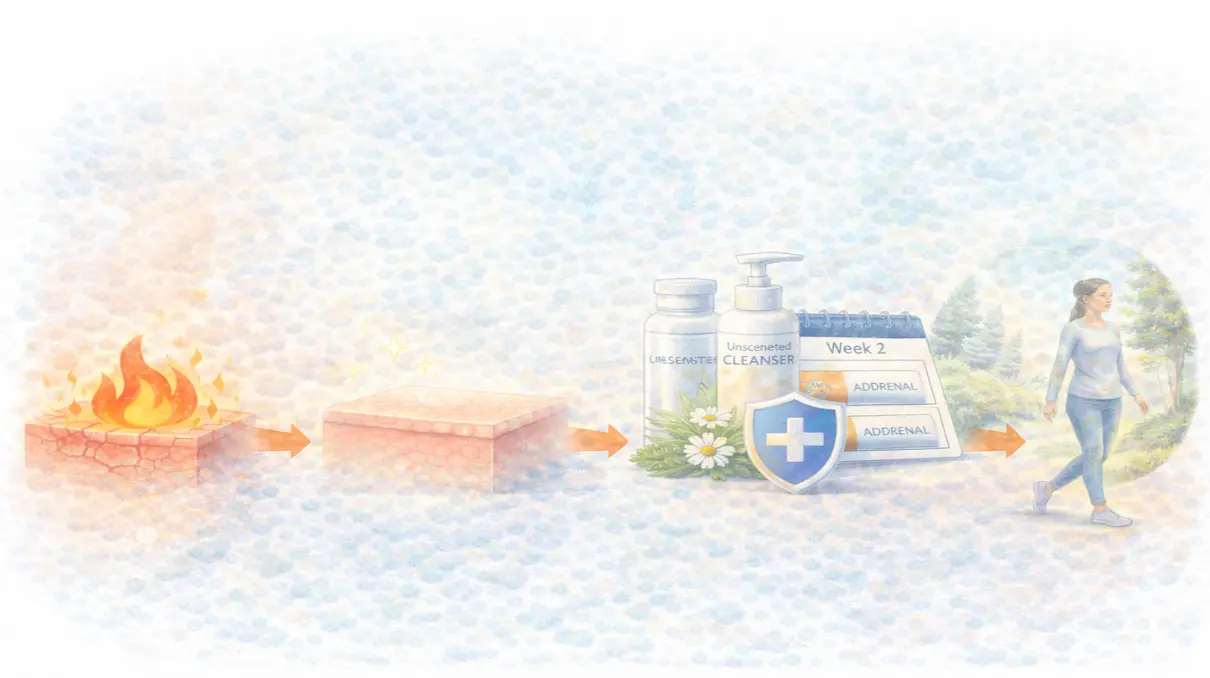
Most people think lichen sclerosus management is about flares.
My experience and what the biology supports is different:
what happens between flares is what determines how often they return, how severe they become, and whether the skin stabilizes or stays fragile.
Many people fall into one of two traps:
- they stop everything as soon as symptoms improve
- or they stay in “flare mode” indefinitely
Both approaches keep the system unstable.
Maintenance is not passive waiting.
It is active stabilization.
What “Maintenance” Actually Means in Lichen Sclerosus
Maintenance does not mean:
- daily strong steroids
- constant product layering
- treating skin that already feels calm
Maintenance means:
- keeping immune activity below the flare threshold
- protecting fragile skin from daily re-triggering
- preventing silent escalation
Even when symptoms improve, LS does not disappear.
Immune signaling quiets, but the skin remains vulnerable.
Maintenance exists to hold the line.
Why Flares Often Return After “Successful” Treatment
Most relapses are not treatment failures.
They’re maintenance failures.
Common reasons flares return:
- stopping treatment abruptly
- friction returning too quickly
- barrier care being abandoned
- relief leading to routine neglect
At a biological level, low-grade immune signaling (involving pathways such as TNF-α and IL-1β) can re-activate when:
- mechanical stress increases
- the barrier weakens
- daily triggers accumulate quietly
Maintenance interrupts this process before symptoms become obvious.
Steroids During Maintenance: Less, Not None
Between flares, inflammation is usually reduced, not absent.
This is where lower-potency steroids make sense.
A common, rational pattern is:
- using clobetasol only during clearly active flares
- stepping down to mometasone when inflammation is moderate
- using hydrocortisone when activity is minimal
The goal is not daily suppression.
It’s preventing silent escalation.
Abruptly stopping all steroids often leads to rebound.
Light, structured maintenance often extends remission.
Maintenance steroid use should feel boring and predictable, not dramatic.
Barrier Protection Is the Backbone of Maintenance
Once inflammation is controlled, mechanical stress becomes the main enemy.
LS skin in maintenance phases is:
- thinner
- less elastic
- more sensitive to friction
Barrier protection helps by:
- reducing micro-trauma
- stabilizing moisture
- limiting nerve irritation
This is why many people stabilize when they consistently use:
- petrolatum / Vaseline for strong friction reduction
- Cicalfate when skin feels raw or post-irritation
- Cicaplast B5+ for daily maintenance in stable phases
- VEA Lipogel, Vitamono EF, or zinc-based barriers for neutral protection
These products do not “treat LS.”
They prevent the conditions that re-trigger it.
Moisture vs Protection: Why Over Hydration Backfires
During maintenance, many people over-hydrate the skin.
Excess moisture can:
- increase friction
- trap heat
- alter the local microbiome
This is why some people feel worse despite moisturizing “correctly.”
Between flares, thin protective layers usually work better than heavy hydration.
The skin should feel protected, not damp.
Friction Control Matters More Than New Products
During maintenance, what touches the skin all day matters more than what’s applied once.
Key contributors include:
- underwear fit
- seams and fabric texture
- daily movement and sitting
- wiping habits
Even mild friction, repeated daily, can re-activate symptoms.
Reducing friction often extends remission more reliably than adding new products.
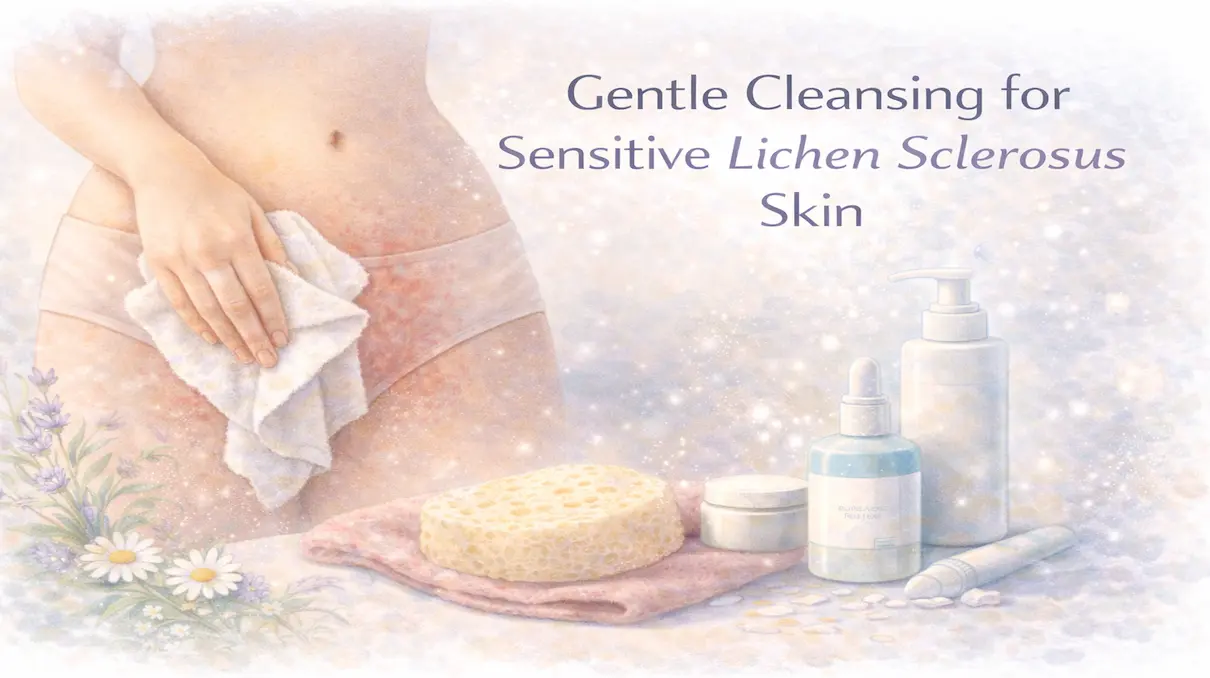
Washing During Maintenance: Keep It Minimal
When inflammation is quiet, cleansing should be:
- gentle
- infrequent
- predictable
Over-washing during maintenance often destabilizes skin that was just calming down.
If washing leaves the skin noticeable afterward tight, aware, or sensitive it’s too aggressive for this phase.
Clean is enough.
Sterile is not necessary.
Early Intervention Beats Flare Protocols
Maintenance works best when people respond to early signals, such as:
- mild burning
- increased sensitivity
- subtle tightness
These often settle with:
- improved barrier protection
- temporary low potency steroid use
- reduced friction
Waiting until symptoms escalate usually means needing stronger treatment again.
What Maintenance Is Not
Maintenance is not:
- permanent high potency steroid use
- constant experimentation
- fear driven routines
- chasing perfect sensation
The goal is stability, not perfection.
Skin that feels predictable and boring is usually doing well.
The Long Term Payoff of Good Maintenance
Consistent maintenance leads to:
- fewer flares
- milder flares when they occur
- less reliance on strong steroids
- improved skin tolerance over time
This is where long-term outcomes are decided, not during isolated flares.
Final Thought
Flares get attention because they’re loud and painful.
But in lichen sclerosus, the quiet periods matter just as much.
Maintenance is where:
- damage is prevented
- routines stabilize
- the future course of the condition is shaped
Doing less but doing it consistently is often what works best.
.webp)