Why Moisturizers Alone Don’t Treat Lichen Sclerosus

One of the most common coping strategies in lichen sclerosus is also one of the most misleading:
trying to manage the disease with moisturizers alone.
People apply creams multiple times a day.
They rotate barrier products.
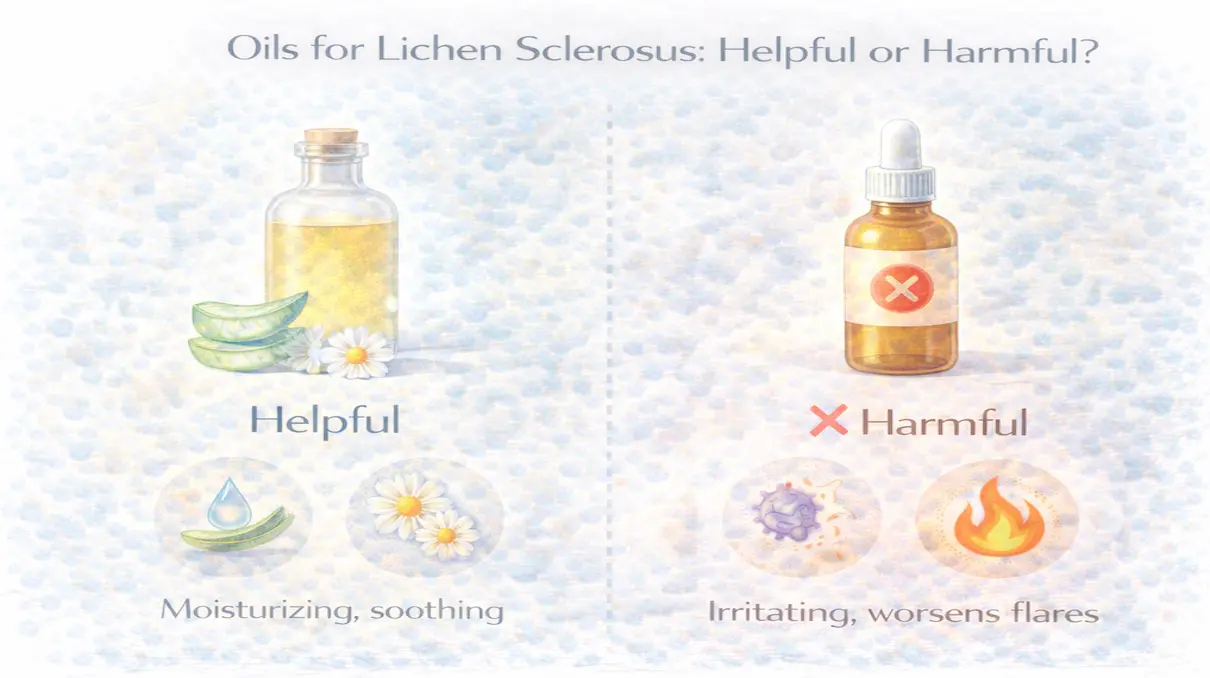
They try oils, balms, zinc creams, “repair” formulas, and anything described as soothing.
Sometimes the skin feels better, briefly.
Then symptoms come back.
This leads to confusion, frustration, and self doubt.
If the skin feels dry and fragile, why isn’t moisturizing enough?
Because lichen sclerosus is not a moisture problem.
What Moisturizers Actually Do, and What They Can’t Do
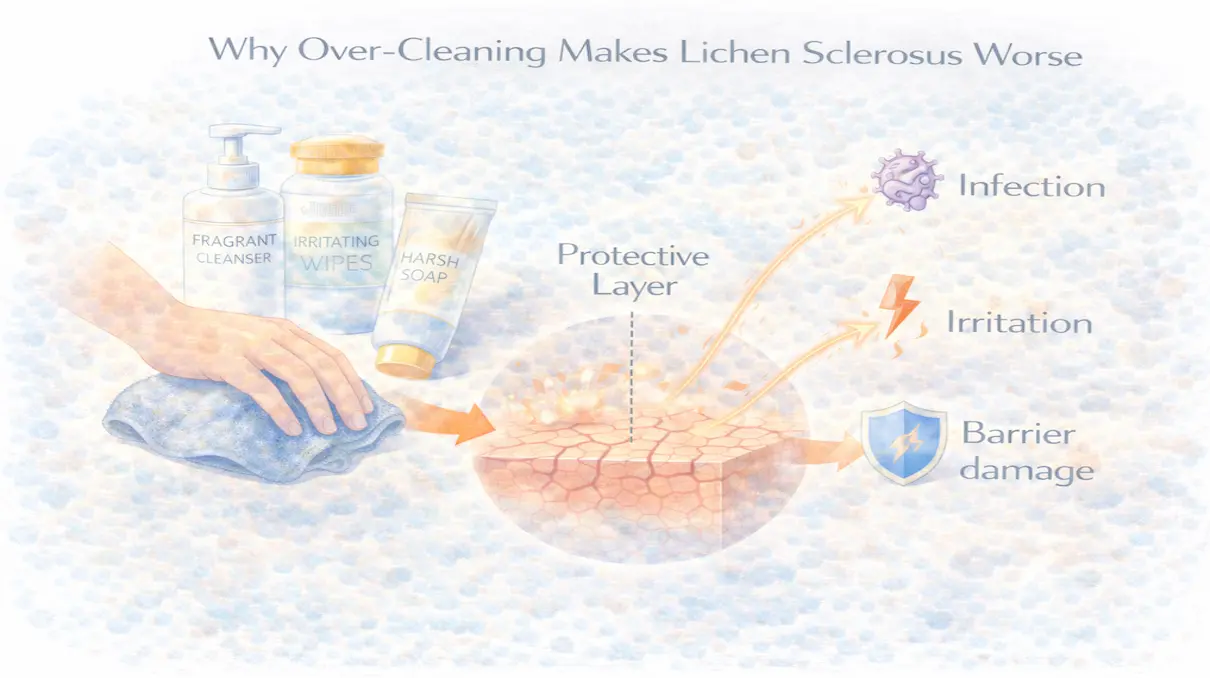
Moisturizers and barrier creams are designed to work on the surface of the skin.
They:
- reduce transepidermal water loss
- soften the outer layer
- reduce friction
- soothe exposed nerve endings
- improve comfort
They do not:
- suppress immune activation
- down regulate inflammatory cytokines
- stop disease driven collagen remodeling
- halt active LS progression
In lichen sclerosus, the primary problem lives below the surface.
Moisturizers act above it.
This mismatch explains why comfort improves but the disease process continues.
Why Moisturizers Can Mask Active Disease
Barrier creams often make LS feel calmer.
They reduce friction.
They reduce surface irritation.
They create a temporary sense of protection.
When inflammation is active, this comfort can be deceptive.
Cytokine signaling, including IFN-γ, TNF-α, and IL-1–driven pathways, can continue quietly even while the surface feels better.
This is why many people say:
“I was doing fine… then it suddenly got worse.”
Nothing sudden happened.
The inflammation was never controlled.
Lichen Sclerosus Is an Inflammatory Disease First
At its core, LS is driven by immune dysregulation.
Inflammatory signaling:
- weakens skin structure
- disrupts collagen organization
- sensitizes nerves
- lowers tolerance to friction
This process requires anti inflammatory treatment.
That is where topical corticosteroids come in.
In real life:
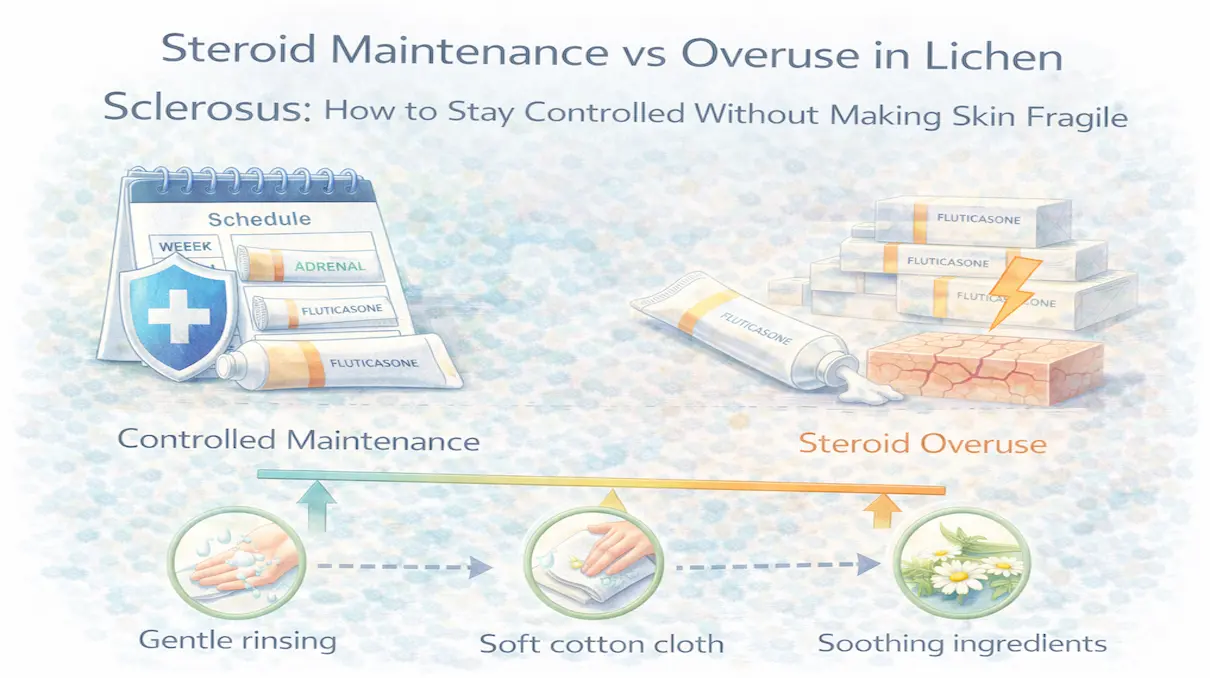
- clobetasol is appropriate when inflammation is strong and active
- mometasone is often sufficient when inflammation is moderate
- hydrocortisone can be enough when activity is low or during tapering
Moisturizers cannot replace this step, no matter how “natural” or expensive they are.
Why Barrier Care Still Matters (But Has a Limit)
Barrier care is essential, just not sufficient on its own.
Its role is to:
- protect healing skin
- reduce mechanical re-injury
- limit friction and moisture imbalance
- support stability after inflammation is controlled
This is why products like:
- petrolatum (Vaseline)
- Cicalfate
- Cicaplast B5+
- zinc-based barriers
- VEA Lipogel
- Vitamono EF
are often very helpful during maintenance.
They prevent re-triggering.
They do not turn off inflammation.
Barrier care works after the fire is put out, not instead of extinguishing it.
The Most Common Mistake: Replacing Treatment With Moisture
A very common pattern looks like this:
Inflammation starts →
Steroid prescribed →
Fear develops →
Steroid use reduced too early →
Moisturizer use increases →
Symptoms fluctuate →
Disease remains active
This is often framed as “natural management.”
Biologically, it is undertreatment.
Long term outcomes are worse when inflammation is repeatedly softened instead of suppressed.
Why Moisturizers Feel Safer Than Steroids
This is understandable.
Moisturizers feel:
- gentle
- familiar
- controllable
Steroids feel:
- powerful
- risky
- intimidating
But in LS, untreated inflammation is the real risk.
When steroids are:
- used at the correct potency
- applied in thin layers
- limited to appropriate phases
- tapered gradually (clob → mometasone → hydrocortisone)
- followed by barrier protection
they are protective, not destructive.
Fear based avoidance causes more damage than correct use.
When Moisturizers Are Enough
Moisturizers alone can be sufficient when:
- inflammation is already controlled
- the skin is stable
- symptoms are mechanical rather than inflammatory
In these phases, barrier care:
- maintains comfort
- prevents friction induced reactivation
- extends remission
This is their proper role: maintenance, not treatment.
The Real Framework That Works
Long-term stability in lichen sclerosus requires all three layers:
- Inflammation control
- (appropriate steroid potency for the phase)
- Gradual tapering
- (clobetasol → mometasone → hydrocortisone when possible)
- Barrier protection
- (to prevent daily re-injury)
Skipping step one while intensifying step three feels safer, but leads to worse control.
Final Thought
Moisturizers are not wrong.
They are incomplete.
Lichen sclerosus is controlled by biology, not comfort alone.
When inflammation is treated properly and the barrier is protected intelligently, moisturizers finally work the way people expect them to, as allies, not substitutes.
That difference is what separates temporary relief from long term stability.