Why Lichen Sclerosus Pain Can Persist Even When the Skin Looks Normal

One of the most confusing and invalidating experiences in lichen sclerosus is this:
The skin looks calm.
No obvious tearing.
No redness.
No visible flare.
And yet the burning, soreness, or hypersensitivity is still there.
This is where many people are told, directly or indirectly, “everything looks fine.”
And this is also where most explanations fail.
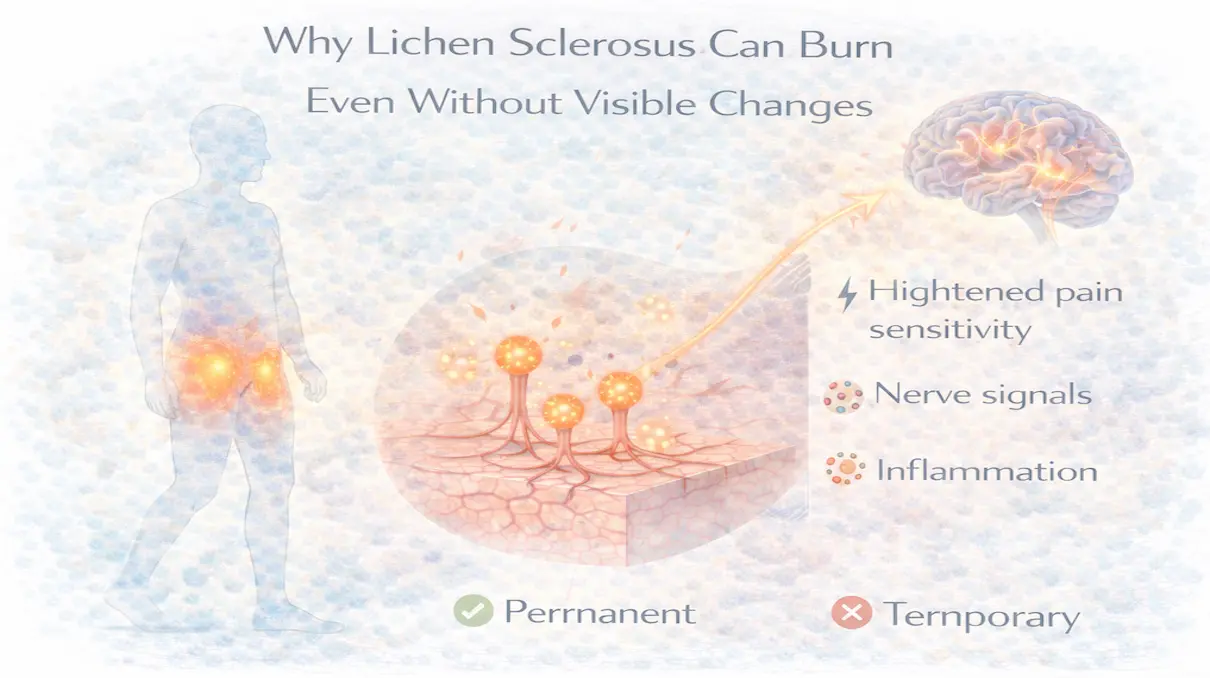
My view is simple: lichen sclerosus pain is not always a surface problem.
Often, it’s a neuro immune problem, and that distinction changes everything.
Why “Normal Looking” Skin Can Still Hurt
Skin appearance tells us about:
- surface inflammation
- visible structural changes
- active lesions or fissures
Pain, however, is generated by:
- nerve endings
- immune mediators beneath the surface
- chemical signals released after repeated irritation
You can have very little visible disease and still have highly sensitized nerves.
This is why:
- symptom severity and visual severity often don’t match
- people feel dismissed despite real pain
- treatment feels confusing even when followed correctly
Where LS Pain Really Lives: The Neuro Immune Interface
Lichen sclerosus is not just a skin condition.
It involves constant interaction between:
- immune cells
- nerve fibers
- the skin barrier
- repeated micro-injury from friction and daily life
Over time, these systems stop resetting properly.
Pain can persist even when inflammation looks controlled.
Mast Cells: The Missing Piece Most People Never Hear About
Mast cells sit close to:
- nerve endings
- blood vessels
- epithelial surfaces
They play a central role in:
- burning
- itching
- hypersensitivity
- pain amplification
In LS, mast cells are often:
- over-responsive
- slow to calm down
- easily re-triggered by friction, stress, or moisture
Even when steroids reduce visible inflammation, mast cell activity can continue irritating nerves.
Chemical Messengers That Keep Pain Alive
Several mediators are commonly involved in persistent LS pain:
- histamine
- tryptase
- prostaglandins
- cytokines such as IL-6 and TNF-α
- nerve growth factor (NGF)
These substances:
- lower pain thresholds
- amplify nerve firing
- make normal sensations feel painful
This is why:
- light touch can burn
- friction feels exaggerated
- symptoms fluctuate without visible changes
Nothing is “imaginary” about this.
Central Sensitization: When the Nervous System Learns Pain
Repeated inflammation and irritation can train the nervous system to overreact.
This is called central sensitization.
In this state:
- nerves fire more easily
- pain lasts longer than the original trigger
- small stimuli feel intense
Important point:
This does not mean the pain is psychological.
It means the nervous system has become hyper alert after repeated injury.
Why Steroids Don’t Always Fix This Type of Pain
Topical steroids:
- suppress immune inflammation
- reduce cytokine signaling
- improve visible skin changes
But they do not:
- directly desensitize nerves
- reset pain signaling
- reverse central sensitization
So someone may:
- finish a correct steroid course
- see the skin improve
- still feel burning or soreness
This is not steroid failure.
It’s a different pain mechanism.
And it’s why escalation alone often backfires.
Barrier Failure Keeps Nerves Irritated (Even When Skin Looks Fine)
When the barrier is fragile:
- friction increases
- moisture shifts irritate nerve endings
- keratinocytes release danger signals
This quietly re-activates pain pathways.
That’s why barrier care matters even when the skin looks normal.
Many people rely on products like:
- petrolatum / Vaseline for friction reduction
- Cicalfate when skin feels raw or irritated
- Cicaplast B5+ during stable phases
- VEA Lipogel or Vitamono EF for neutral daily protection
- zinc-based barrier creams in specific situations
These don’t “treat LS” but they reduce nerve re-triggering, which is often the missing step.
Why Pain Can Feel Worse When “Nothing Is Happening”
Several factors amplify neuroimmune pain:
- friction from clothing or movement
- moisture or maceration
- stress and fatigue
- repeated checking or touching
- anxiety created by unpredictability
When nerves are sensitized, even protective behaviors can keep the loop going.
The Vicious Cycle That Keeps Pain Stuck
Pain leads to:
- tension
- guarding
- altered movement
Which leads to:
- increased friction
- reduced circulation
- slower recovery
Which reinforces pain.
Breaking this cycle requires addressing both:
- skin protection
- nervous system calming
Treating only one side rarely works.
Why Some People Improve Without Changing Medication
Some people improve when they:
- simplify routines
- stop constantly switching products
- reduce friction and moisture
- stabilize daily habits
This isn’t placebo.
It reflects reduced neuroimmune activation and fewer repeated pain signals.
Consistency lets the nervous system down-regulate.
When Persistent Pain Needs Reevaluation
Medical review is important if:
- pain worsens despite stable skin
- new symptoms appear
- pain spreads beyond original areas
- sleep or quality of life is affected
Sometimes additional support for nerve-related pain is needed, and that’s not failure.
Final Thought
Pain does not need visible damage to be real.
In lichen sclerosus, persistent pain often reflects:
- sensitized nerves
- immune mediators
- a barrier that never fully stabilized
When you understand this, the confusion lifts.
Long-term relief isn’t just about suppressing inflammation
it’s about calming the system as a whole.
That’s the piece most people were never taught.