Can Lichen Sclerosus Go Into Remission?
After the initial shock of a lichen sclerosus diagnosis, almost everyone asks the same question:
“Can this ever go into remission?”
The answers online are usually unhelpful extremes.
Some say LS is lifelong and always worsens.
Others promise full reversal if you find the “right” approach.
Both views are misleading.
The truth is more nuanced and far more hopeful, if you understand what remission actually means in lichen sclerosus.
My View First: LS Is Chronic, Not a Life Sentence
Lichen sclerosus is a chronic immune mediated condition.
That does not mean constant symptoms.
It does not mean inevitable progression.
And it does not mean daily suffering forever.
What it means is this:
LS behaves like a condition that flares when inflammation is active and quiets when it is controlled.
Most people are never taught how to aim for that quiet phase, so they assume it doesn’t exist.
It does.
What “Remission” Actually Means in Lichen Sclerosus
Remission in LS does not mean cure.
Remission means:
- inflammation is inactive or very low
- symptoms are absent or minimal
- skin structure is stable
- flares are infrequent and manageable
In short: the disease is quiet, not gone.
This distinction matters, because chasing “cure” leads to frustration, while aiming for remission leads to stability.
Lichen Sclerosus Is Chronic, But Not Constantly Active
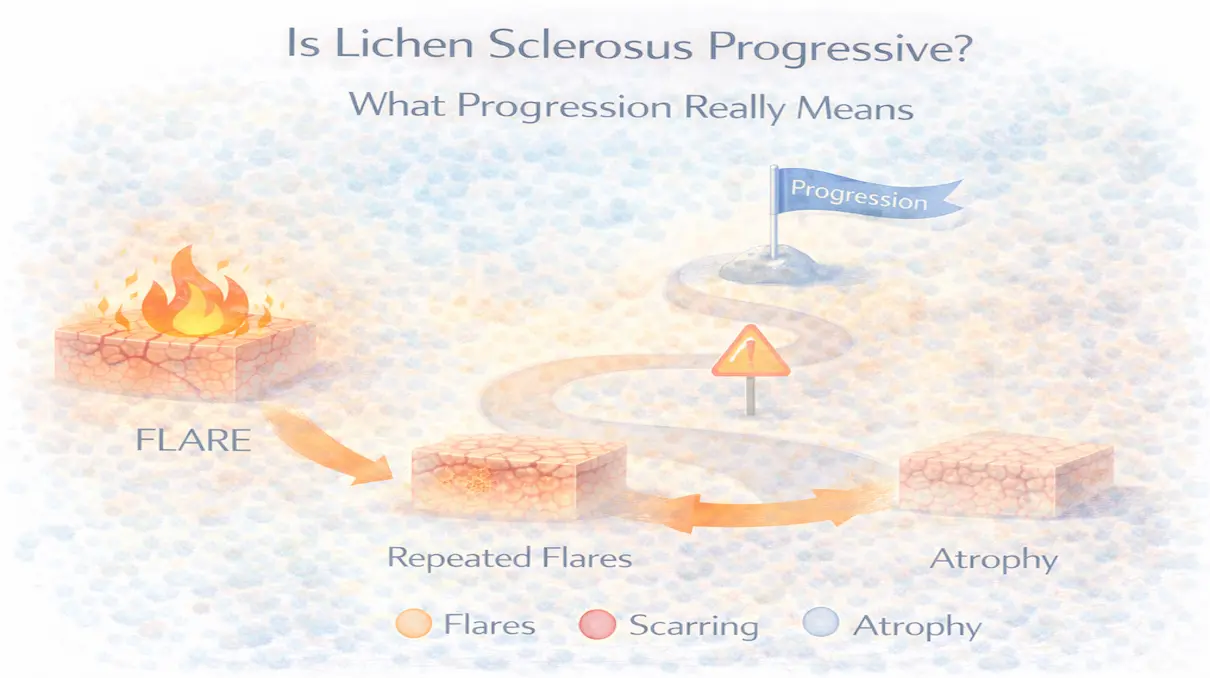
LS is a long-term condition, but it is episodic, not continuously progressive.
Many people experience:
- active inflammatory phases
- long calm periods
- mild, intermittent symptoms
- years of relative stability
Those long calm periods are remission, even if the word is rarely used.
What Actually Allows Remission to Happen
Remission is not luck.
It’s not genetics alone.
And it’s not achieved by avoiding treatment.
It is strongly associated with:
- early and adequate inflammation control
- correct steroid potency for the phase
- tapering instead of stopping abruptly
- reduction of daily mechanical stress (friction, moisture, over-cleaning)
- consistent barrier protection
When these pieces align, inflammatory signaling often stays quiet for long periods.
The Role of Steroids in Achieving Remission
This is where confusion and fear usually enters.
Remission does not require staying on the strongest steroid forever.
In real-world management:
- clobetasol is appropriate when inflammation is clearly active and strong
- mometasone is often enough once inflammation is reduced
- hydrocortisone can be sufficient when inflammation is mild or during tapering and maintenance
The goal is matching potency to biology, not maximum suppression.
Used this way, steroids enable remission rather than preventing it.
Why Some People Never Reach Remission
When remission doesn’t happen, it’s rarely because LS is “aggressive.”
More often it’s because:
- inflammation is under-treated out of fear
- treatment is stopped too early
- daily friction keeps re-triggering the skin
- routines change constantly
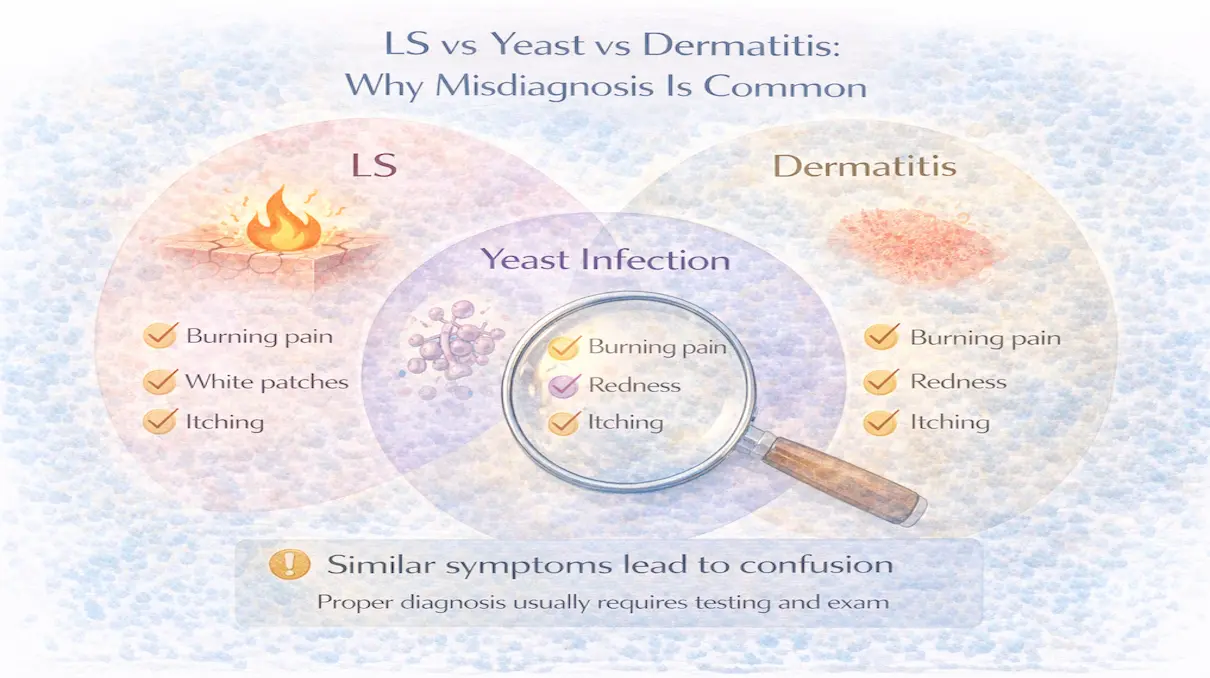
- symptoms are mistaken for permanent damage
This keeps LS in a low grade active state, not severe, but never fully calm.
Remission Is Usually Gradual, Not Dramatic
Many people expect a clear moment where LS “switches off.”
That’s not how it usually works.
Remission more often looks like:
- flares becoming shorter
- symptoms responding faster
- less need for high-potency steroids
- longer calm intervals
- fewer daily sensations
Progress is incremental and easy to miss if you’re only watching for perfection.
Does Remission Mean You Stop All Treatment?
Usually, no.
Most people in remission still benefit from:
- low frequency maintenance
- appropriate tapering rather than full cessation
- ongoing barrier protection
- awareness of triggers
Stopping everything abruptly often leads to relapse, not because remission failed, but because inflammation reactivates.
Where Daily Care Fits In
Once inflammation is quiet, daily care becomes the stabilizer.
This is where barrier products actually matter:
- petrolatum-based protection (Vaseline)
- Cicalfate
- Cicaplast B5+
- zinc-based repair creams
- lipid gels like VEA Lipogel
These don’t create remission, but they help maintain it by reducing friction, micro trauma, and re-activation.
This is the phase where good routines often outperform new treatments.
Can Remission Last for Years?
Yes.
Many people live for years, even decades with LS that is:
- minimally symptomatic
- structurally stable
- predictable
- rarely requiring strong intervention
This is most common when:
- inflammation is treated early
- potency is adjusted instead of avoided
- flares are addressed promptly
- fear doesn’t drive decision-making
LS becomes a background condition, not a daily focus.
What Remission Is Not
Remission does not mean:
- perfect looking skin
- zero sensation forever
- never using medication again
- pretending LS doesn’t exist
It means LS is no longer in control of your day to day life.
Final Thought
Yes, lichen sclerosus can go into remission.
Not by ignoring it.
Not by chasing cures.
And not by replacing treatment with hope.
Remission comes from:
- controlling inflammation properly
- tapering intelligently (clobetasol when needed, mometasone or hydrocortisone when possible)
- protecting the skin
- reducing daily triggers
Remission in LS isn’t a miracle.
It’s the result of correct, consistent management, and it’s far more achievable than most people are told.