Does Lichen Sclerosus Always Scar? What’s Permanent vs What Isn’t

Scarring is one of the most feared aspects of lichen sclerosus.
People notice whitening, tightening, texture changes sometimes very early and immediately assume the damage is permanent and will only get worse.
That fear is understandable.
But biologically, it is often wrong.
My view is simple and evidence based:
lichen sclerosus does not automatically scar.
Scarring depends on how inflammation behaves over time, not on diagnosis alone.
Understanding this distinction changes how people treat LS, and how their skin responds long term.
What “Scarring” Actually Means in Lichen Sclerosus
The word scarring is used very loosely in LS, and that creates unnecessary panic.
Not every visible change equals permanent scar tissue.
LS skin can show:
- inflammatory swelling
- temporary collagen tightening
- altered elasticity
- barrier disruption
- surface whitening
Only some of these represent true, irreversible scarring.
Most early changes are inflammatory remodeling, not fixed damage.
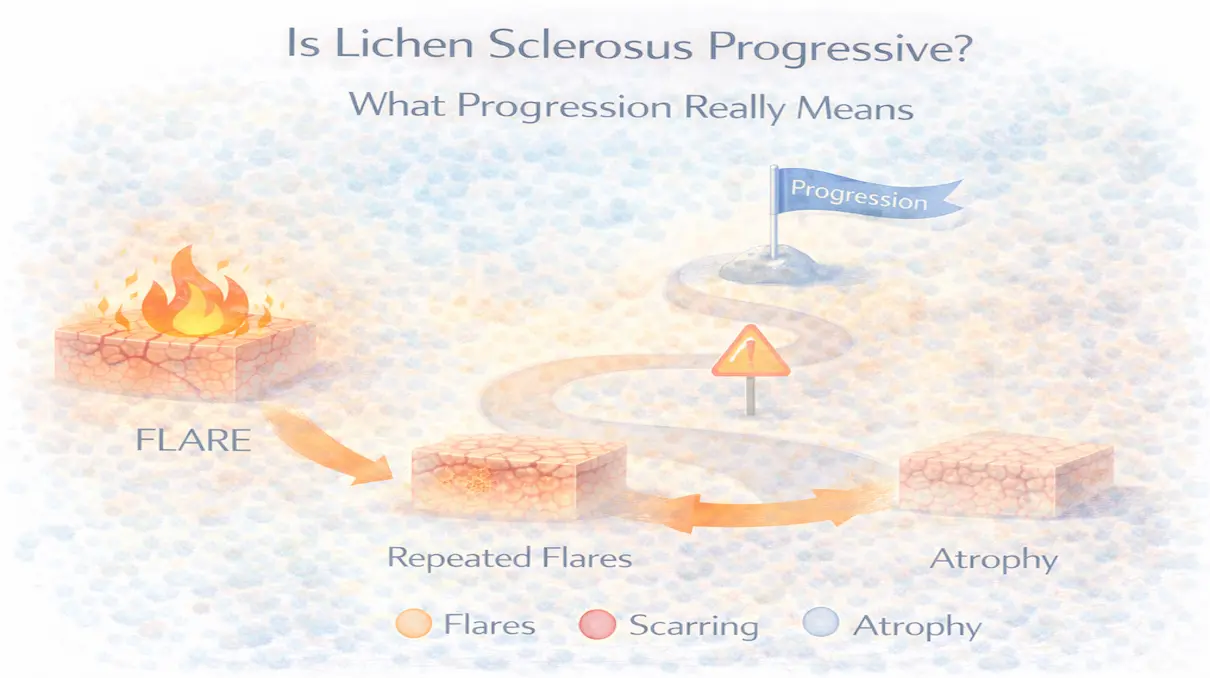
Inflammation vs True Scar Tissue (This Is the Key Difference)
True scarring involves:
- replacement of normal tissue with dense collagen
- loss of normal elasticity and architecture
- structural changes that do not reverse
This typically happens when:
- inflammation is intense
- inflammation is prolonged
- inflammation is untreated or under-treated
By contrast, many early LS changes are not permanent.
When inflammation, driven by cytokines such as IFN-γ, TNF-α, and IL-1β is controlled, the skin often:
- softens
- regains flexibility
- stops remodeling
- stabilizes structurally
This is why early treatment changes long term outcomes.
Why Early LS Often Looks Worse Than Later Years
A pattern many people notice:
- early disease looks dramatic
- later years appear calmer
This happens because:
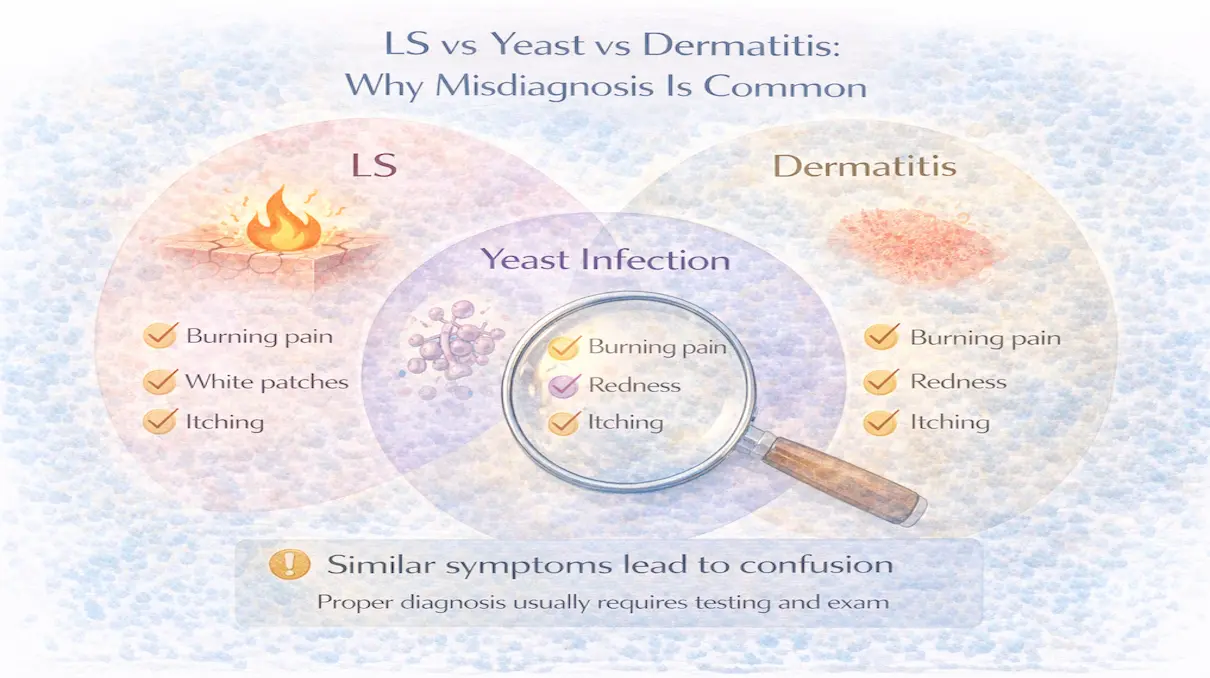
- early LS is often untreated or misdiagnosed
- inflammation runs unchecked
- diagnosis leads to targeted suppression
Once inflammation is controlled, the skin stops constantly remodeling, and progression slows or halts.
Progression risk is often highest before diagnosis, not after it.
Which Changes Are Often Reversible (or Partially Reversible)
When inflammation is brought under control, the following often improve:
- surface whitening driven by inflammation
- mild tightening related to swelling
- shiny or fragile texture from barrier breakdown
- sensitivity due to nerve exposure
These changes respond to:
- correct steroid use (not avoidance)
- proper tapering instead of abrupt stopping
- consistent barrier protection
- reduction of friction and micro-trauma
This is where products like petrolatum (Vaseline), Cicalfate, Cicaplast B5+, zinc-based barriers, VEA Lipogel, and Vitamono EF play a real role not as treatment, but as structural protection.
Which Changes Are More Likely Permanent
Some changes are less reversible, especially if present for years:
- architectural fusion
- deep fissure scars
- significant loss of elasticity
- long-standing structural distortion
However, even permanent changes do not automatically mean worsening disease.
Stable scars are not active inflammation.
This distinction prevents unnecessary escalation and fear.
Why Symptoms Don’t Always Match Scarring
One of the most confusing aspects of LS is this:
- pain or burning can persist
- even when the skin looks unchanged
This is usually due to:
- nerve sensitization
- fragile barrier exposing nerve endings
- mechanical irritation
- neuro immune amplification
Symptoms reflect activity and sensitivity, not always damage.
This is why treating sensation alone without understanding mechanism often fails.
How Treatment Changes the Scarring Equation
Correct treatment doesn’t just reduce symptoms, it changes tissue behavior.
Steroids:
- suppress inflammatory cytokines
- reduce fibroblast overactivation
- limit excessive collagen deposition
Barrier protection:
- prevents micro tears
- reduces repeated injury
- allows tissue recovery between flares
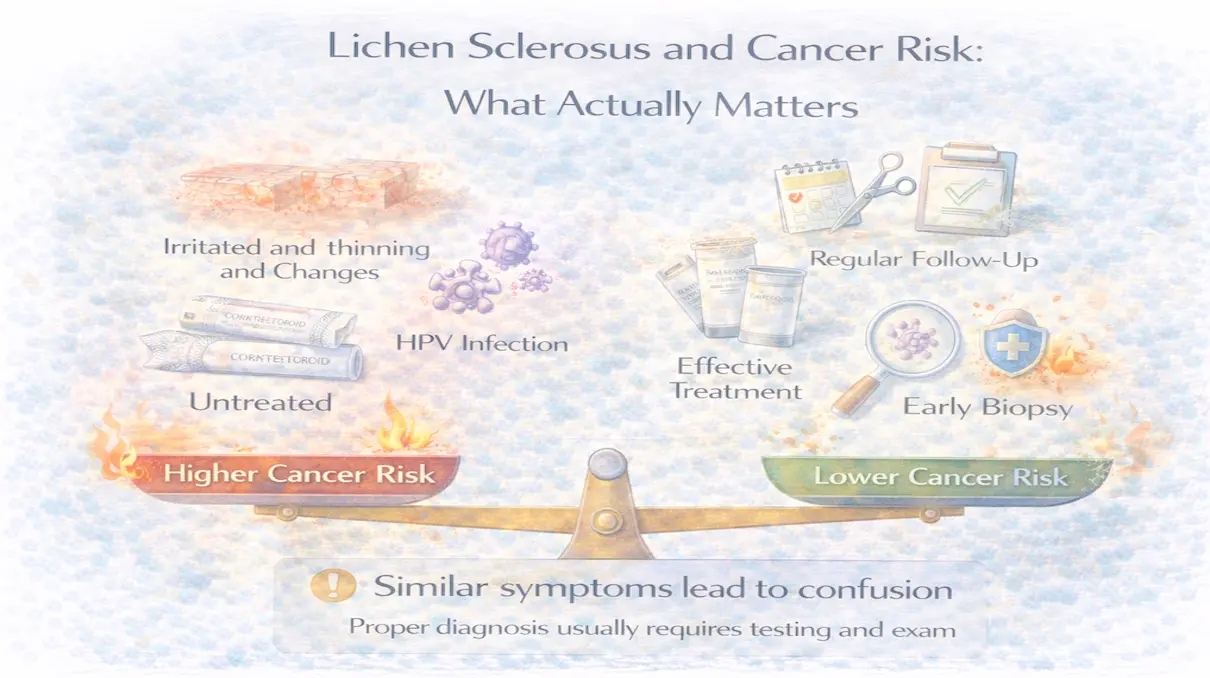
This combination, not avoidance of steroids, is what limits scarring long term.
Why Fear Increases Scarring Risk
Ironically, fear of scarring often causes behaviors that increase it:
- avoiding steroids
- under-treating flares
- letting inflammation smolder
Uncontrolled inflammation is the main driver of permanent damage.
Calm, controlled suppression is protective.
What Long Term Stability Actually Looks Like
Stability does not mean:
- perfect appearance
- zero sensation
- never using medication
It means:
- inflammation is controlled quickly
- flares are shorter and milder
- structure remains largely unchanged
- daily life feels predictable
That is a successful long-term outcome.
Final Thought
Lichen sclerosus does not always scar.
Scarring depends on inflammation not time, not diagnosis, not fear.
Early, correct treatment combined with consistent barrier protection and mechanical awareness dramatically reduces the risk of permanent damage.
Understanding this replaces panic with control
and control improves outcomes.