Lichen Sclerosus and Cancer Risk: What Actually Matters
One of the most frightening words people hear after a lichen sclerosus diagnosis is cancer.
Sometimes it’s mentioned casually.
Sometimes it’s emphasized without explanation.
Sometimes it’s minimized so much that people stop paying attention.
The result is often the same: fear, confusion, and in many cases avoidance of treatment, which ironically increases risk rather than reducing it.
The reality is far more precise, far more manageable, and far less dramatic than most people are led to believe.
What Cancer Risk Actually Means in Lichen Sclerosus
Lichen sclerosus is associated with an increased risk of squamous cell carcinoma of the affected skin.
That does not mean:
- cancer is common
- cancer is inevitable
- lichen sclerosus “turns into cancer”
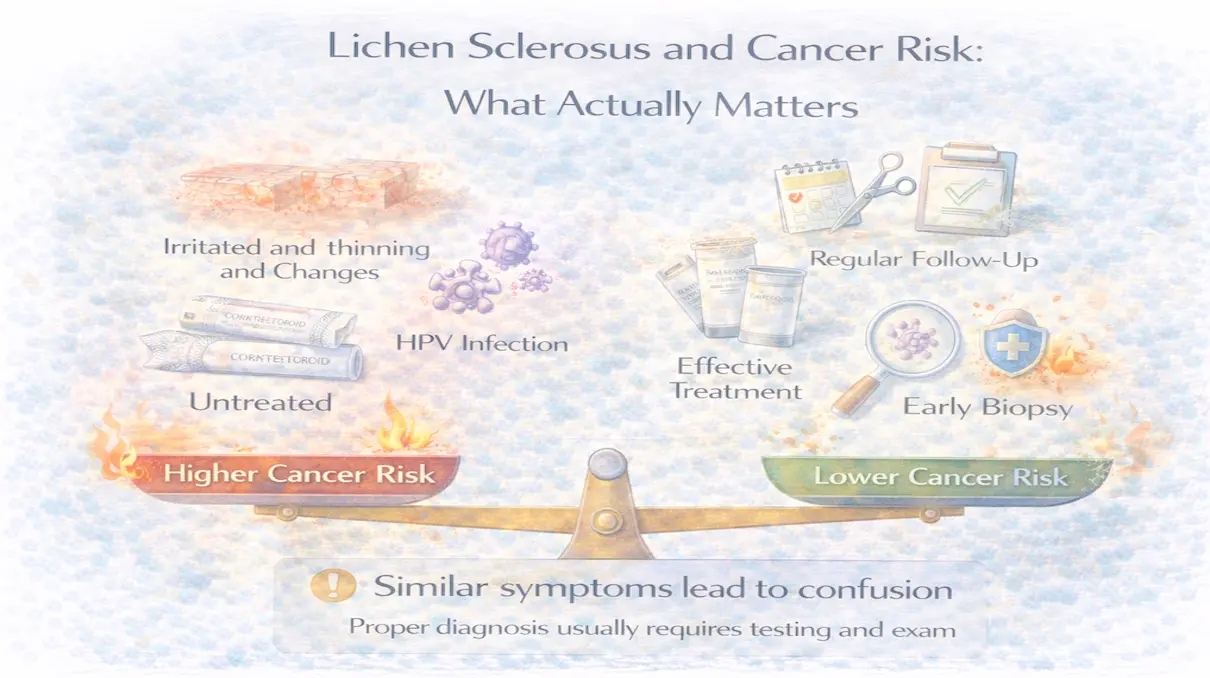
It means that chronic, uncontrolled inflammation can increase risk over time.
Cancer risk in LS is conditional, not automatic.
The Single Most Important Factor: Persistent Inflammation
Cancer risk in lichen sclerosus is driven primarily by:
- long-standing, untreated inflammation
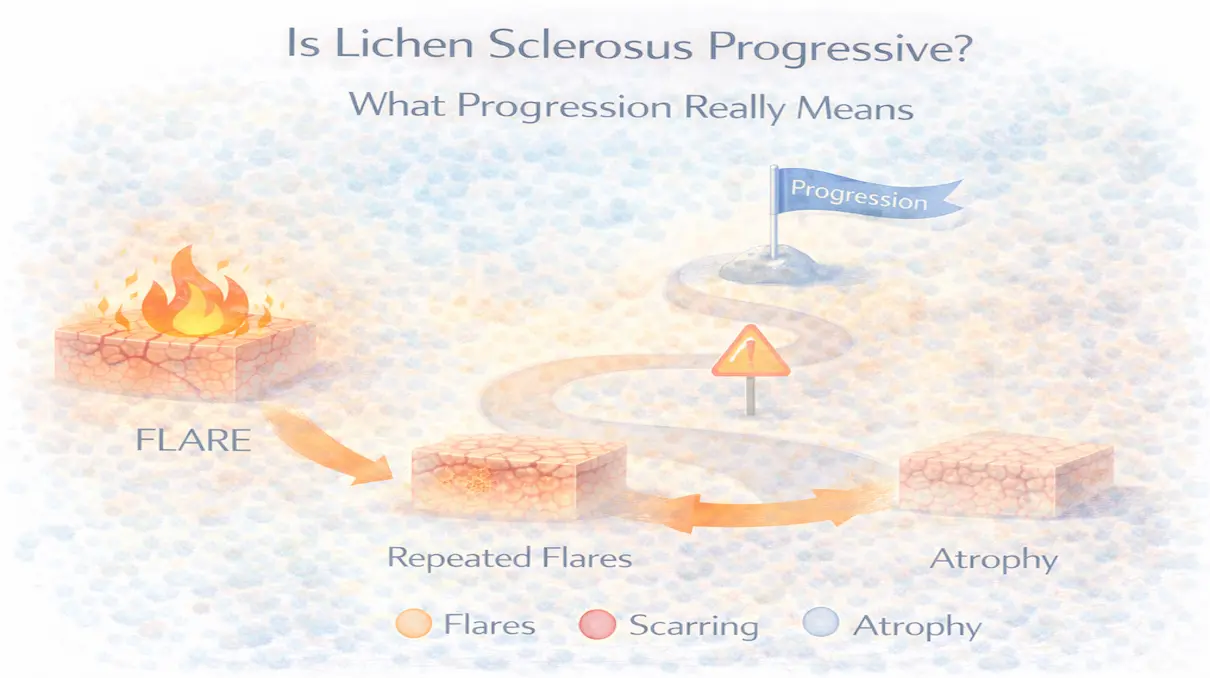
- repeated flares left uncontrolled
- chronic tissue damage and abnormal remodeling
Inflammation creates an environment where cells are:
- under constant stress
- more likely to undergo abnormal changes
- slower to repair correctly
When inflammation is controlled, risk drops dramatically.
This is the part that is often missed, or poorly explained.
Why Proper Treatment Reduces Cancer Risk
Multiple long-term studies show that people with LS who use appropriate topical corticosteroids have:
- lower rates of malignant transformation
- better preservation of normal skin structure
- fewer chronic non healing lesions
This matters enormously.
Correct steroid use in LS is protective, not dangerous.
The goal is not constant suppression, it’s control of inflammation before it becomes chronic.
Steroid Potency Matters, But Matching It to Severity Matters More
Cancer risk reduction does not require staying on the strongest steroid forever.
In real-world management:
- clobetasol is appropriate when inflammation is strong and active
- mometasone is often enough once inflammation is reduced
- hydrocortisone can be sufficient for mild inflammation or maintenance
What matters is not under treating active disease.
Fear-based under treatment is far more dangerous than stepping potency down appropriately once control is achieved.
What Does Not Increase Cancer Risk
Several things people worry about unnecessarily do not independently increase cancer risk:
- occasional flares that are treated promptly
- long symptom free periods
- correct long-term maintenance therapy
- careful, intermittent steroid use
Cancer risk is linked to chronic uncontrolled disease, not to living with LS itself.
Why Avoiding Steroids Actually Increases Risk
One of the most harmful myths in LS care is that steroids “cause cancer.”
In reality:
- avoiding treatment allows inflammation to persist
- persistent inflammation increases cancer risk
People who avoid or severely limit steroid use out of fear often experience:
- more frequent flares
- chronic erosions or non healing areas
- progressive tissue damage
This is exactly the environment in which risk increases.
The Role of Daily Care and Barrier Protection
Controlling inflammation is essential, but daily care determines whether control lasts.
Barrier products such as:
- petrolatum based protection (Vaseline)
- Cicalfate
- Cicaplast B5+
- zinc-based repair creams
- VEA Lipogel
do not prevent cancer on their own, but they reduce re-injury, friction, and chronic irritation that can keep inflammation active.
Barrier care supports treatment; it does not replace it.
Warning Signs That Should Be Checked
Most LS-related cancers do not appear suddenly.
They are often preceded by:
- a persistent sore that does not heal
- a thickened, raised, or firm area
- a lesion that behaves differently from usual flares
- focal bleeding or pain that does not settle
These signs do not mean cancer, but they do mean evaluation is appropriate.
Awareness matters more than fear.
Follow Up Is About Familiarity, Not Panic
Reducing cancer risk is not about constant appointments or obsessive checking.
It’s about:
- knowing your baseline skin
- noticing changes that persist
- treating inflammation early
- maintaining predictable routines
Most people who develop complications do so after years of poorly controlled disease, not despite good care.
What “Low Risk” LS Management Actually Looks Like
Low-risk management includes:
- inflammation controlled with appropriate steroid potency
- gradual tapering rather than abrupt stopping
- consistent barrier protection and friction reduction
- stable, boring daily routines
- periodic medical review
In this context, cancer risk becomes very low.
Final Thought
Lichen sclerosus does carry a cancer risk, but that risk is not random, not inevitable, and not something to panic over.
It is driven by chronic inflammation.
When inflammation is treated correctly, using clobetasol when necessary, stepping down to mometasone or hydrocortisone when possible, and supporting the skin with intelligent daily care, the vast majority of people never develop serious complications.
Understanding this replaces fear with control.
And in lichen sclerosus, control is what actually protects you.